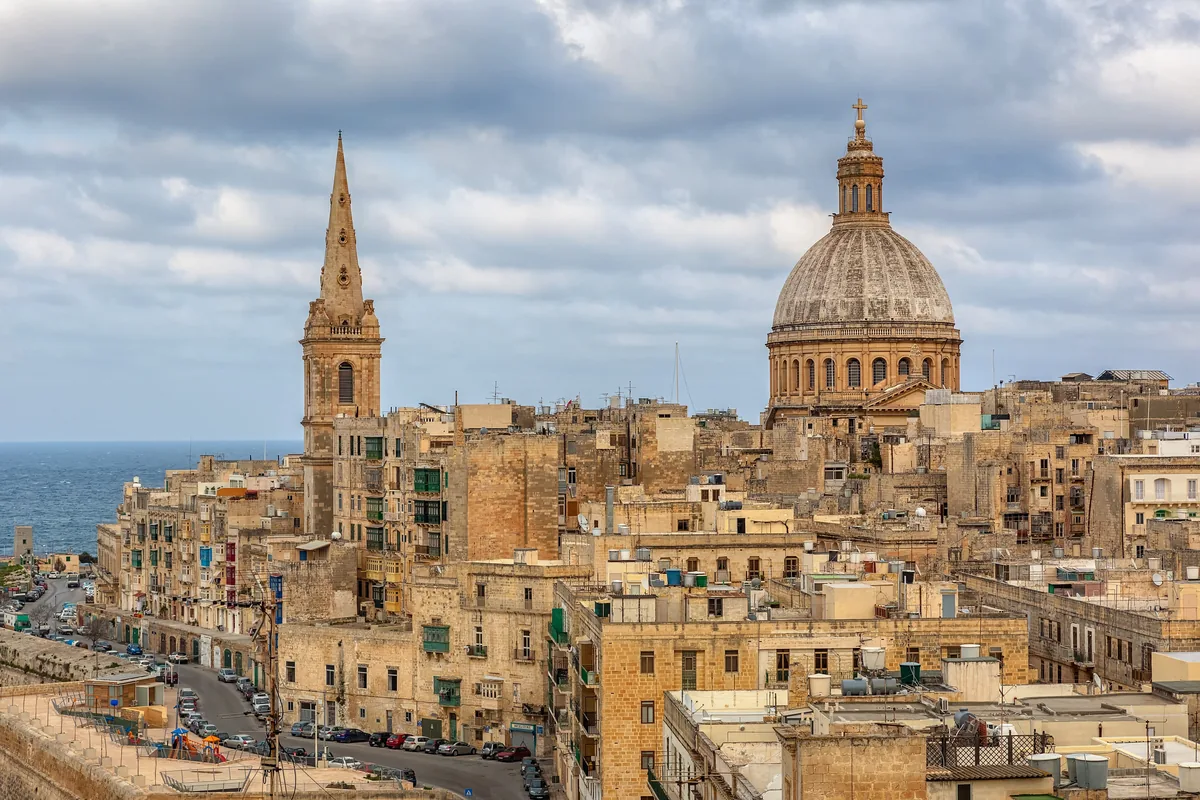
Malta is tiny - 316 km², smaller than the Isle of Wight - and has more history per square metre than almost anywhere on earth. Its megalithic temples are older than Stonehenge and the pyramids; the Knights of St John built Valletta as a fortress capital in the 1500s after surviving a great Ottoman siege; and the islands were a British colony until 1964, which is why they drive on the left and speak English alongside Maltese.
There are three inhabited islands: Malta, with Valletta and nearly everything else; Gozo, greener, slower and a 25-minute ferry away; and Comino in between, with the famous Blue Lagoon and almost nobody living on it. Everywhere on Malta is within an hour of everywhere else, which makes one base enough for a whole trip.
When to go, honestly
April-June and September-October are the best months: warm (low to high 20s), sea swimmable from June to November, and the crowds manageable. July and August are hot, humid and busy, especially at the Blue Lagoon and on the beaches. Winter is mild - often 15-18°C by day - which makes Malta one of the best winter-sun city breaks in Europe, though it rains in short bursts and the sea is cool.
Every town parish throws a festa in summer, with brass bands, fireworks and processions, mostly on weekends from June to September; they are loud, joyful and worth planning an evening around. Holy Week before Easter brings big processions too.
Four Maltas
Four areas, all within an hour of one another.
Valletta. A UNESCO-listed Baroque city built on a grid by the Knights, entirely surrounded by bastions. St John's Co-Cathedral - plain outside, gold inside - holds Caravaggio's Beheading of St John, the only painting he signed. The Upper Barrakka Gardens look over the Grand Harbour, and the Saluting Battery fires a cannon there at noon.
The Three Cities and the harbour. Across the Grand Harbour from Valletta: Birgu (Vittoriosa), Senglea and Cospicua, older and quieter, with Fort St Angelo at the tip. A traditional dgħajsa water taxi across is the way to get there. Marsaxlokk, on the south coast, has brightly painted luzzu fishing boats and a Sunday fish market.
Mdina and the centre. Mdina, the old walled capital, is called the Silent City for its narrow, near-traffic-free streets; next to it, Rabat has St Paul's catacombs. Inland are the prehistoric temples of Ħaġar Qim and Mnajdra on the south cliffs, and the Ħal Saflieni Hypogeum, an underground burial complex cut from rock 5,000 years ago.
Gozo and Comino. Gozo is rural: the Ġgantija temples (among the oldest free-standing structures in the world), the Cittadella in Victoria, Ramla's red-sand beach, the salt pans at Xwejni and the dive sites at Dwejra, where the Azure Window stood until it collapsed into the sea in 2017. Comino's Blue Lagoon has shallow turquoise water and, since 2025, a free timed pass to control crowds.
Where nobody goes, and should
Most visitors stay in Sliema and St Julian's, which are busy, built-up and convenient. Staying in Valletta itself, in the Three Cities or on Gozo gives a completely different trip: quiet evenings, old stone and far fewer people. Gozo in particular rewards two or three nights rather than a day trip - Xlendi, Marsalforn and the villages feel like Malta did decades ago.
On Malta, the Dingli Cliffs at sunset, the walk along the north-west coast at Għajn Tuffieħa and Golden Bay, and the Victoria Lines - a British-era fortification wall across the island, with a walking trail along it - are quiet and beautiful. Underwater, Malta is one of the best diving destinations in the Mediterranean, with warm, clear water and wrecks close to shore.
What to eat and drink
Maltese food mixes Sicilian, North African and British: pastizzi (flaky pastries of ricotta or mushy peas, very cheap and sold everywhere), ftira (a ring-shaped bread sandwich, especially on Gozo), rabbit stew (stuffat tal-fenek, the national dish), lampuki fish pie in autumn, and ħobż biż-żejt, bread rubbed with tomato and filled with tuna, capers and olives.
Try Kinnie, the bitter orange soft drink, and Cisk lager. Maltese and Gozitan wines from local grapes like girgentina and ġellewża are improving fast. For dessert, imqaret (date pastries) and, at Easter, figolli.
Where everything is
Every place named in this guide, on one map. Distances here are short - that is the whole planning trick.
Malta itineraries, by the kind of traveller you are
Four plans for the same country. They are written as schedules because the hard part here is not what to see, it is what order to see it in.
First time here
4 days
Three nights in Valletta, one on Gozo
Day 1Valletta. St John's Co-Cathedral (morning, before the cruise groups), the Grand Master's Palace, Upper Barrakka at noon for the cannon, and a sunset drink on the bastions.
Day 2The Three Cities and Marsaxlokk. A dgħajsa across the harbour to Birgu, Fort St Angelo and Senglea's gardens. Sunday is fish-market day in Marsaxlokk.
Day 3Mdina, Rabat and the temples. Mdina in the early morning while it is truly silent, the catacombs in Rabat, then Ħaġar Qim and Mnajdra for the late light on the cliffs.
Day 4Gozo. Ferry from Ċirkewwa or the fast ferry from Valletta, then Ġgantija, the Cittadella, and Ramla bay. Stay the night if you can.
Book the Ħal Saflieni Hypogeum the moment you have dates: only 80 people a day, in groups of 10, and it sells out months ahead.
Divers and swimmers
5 days
Two nights on Malta's north coast, three on Gozo
Day 1Check-in dive at Ċirkewwa. The P29 patrol boat and Rozi tug wrecks, both easy and shallow-ish.
Day 2The Blue Lagoon. Book the free timed pass first, go in the early slot, and swim before the boats arrive.
Day 3Gozo's Blue Hole. Dwejra's inland sea and the Blue Hole, one of the best shore dives in Europe.
Day 4The Um el Faroud or Xlendi. Back to Malta for the big wreck off Wied iż-Żurrieq, or stay on Gozo for Xlendi's caves and reef.
Day 5Snorkel and rest. Wied il-Għasri, a narrow gorge ending in the sea on Gozo's north coast. No flying for 24 hours after diving.
History, slowly
4 days
Valletta as a base
Day 1The Knights. The Grand Master's Palace armoury, St John's, and the Malta Experience film for the big picture.
Day 2Before the Knights. The Hypogeum (if you booked), Tarxien temples nearby, and the National Museum of Archaeology in Valletta with the 'Sleeping Lady'.
Day 3The war. The Lascaris War Rooms under Valletta, where the Allied invasion of Sicily was planned, and Fort St Elmo's war museum.
Day 4Mdina and the Cathedral Museum. The old capital, and dinner at a restaurant in the walls.
With kids
4 days
A base near Golden Bay or Mellieħa
Day 1Beach day. Għadira (Mellieħa Bay) is Malta's biggest sandy beach, shallow and calm.
Day 2Popeye Village. The film set from the 1980 Popeye movie, turned into a small theme park on a cove.
Day 3Valletta and the cannon. The noon gun at the Saluting Battery and a harbour cruise in the afternoon.
Day 4Comino by boat. The Blue Lagoon's shallow water in the early time slot, before it gets crowded.
Things to do in Malta
See Caravaggio in St John's Co-CathedralVallettaModest dress; no stiletto heels on the marble tombs.
Walk the Silent CityMdinaEarly morning or evening, when day-trippers have gone.
Go underground in a 5,000-year-old burial siteĦal Saflieni HypogeumAbout €35; book months ahead through Heritage Malta.
Swim at the Blue LagoonCominoFree timed pass required since 2025. Morning slot, weekdays.
Cross the Grand Harbour by dgħajsaValletta to BirguA traditional water taxi, a few euros each way.
Stand in the oldest temples on earthĠgantija, GozoOlder than Stonehenge by about a thousand years.
Dive a wreck from the shoreĊirkewwa or GozoWarm, clear water most of the year.
Catch a village festaAny parish, June-SeptemberFireworks, brass bands, and the whole town out.
What our explorers actually reached
28 explorers with public maps have marked Malta, and 12 of them went on to mark the localities they reached. The typical one reached 13.5 of 68 - 20% of the country - and the most thorough quarter reached 31% or more.
Typical explorer 20% · top quarter 31%+
The localities they marked most: Valletta, Sliema, Marsaxlokk, Victoria, Birgu.
And where they went instead
89% of explorers who marked Malta also marked Greece (vs 51% of everyone)
68% of explorers who marked Malta also marked Croatia (vs 38% of everyone)
57% of explorers who marked Malta also marked Slovenia (vs 26% of everyone)
Read these as marks on maps, not as reviews: our explorers skew European, and a country nobody has marked is not a country worth skipping. Aggregates only, never an individual, and only from accounts that are public. Read on 24 September 2026.
Practicalities
Getting around
Public buses run by Malta Public Transport reach almost everywhere, slowly. Ferries run between Valletta and Sliema, the Three Cities and Gozo. Driving is on the left and parking in towns is hard.
Money and language
Euro, Schengen. English is an official language alongside Maltese, so everything is bilingual.
Eco-contribution
Accommodation adds a small eco-contribution per person per night, capped per stay; under-18s are exempt.
Plugs
British three-pin plugs (type G), a leftover from colonial days that surprises many European visitors.
Flights, hotels and getting around
Valletta (MLA) is the main way in. One airport, 20 minutes from Valletta. Fast ferries also run from Pozzallo (about 1h45) and Catania (about 3h) in Sicily.
These are plain searches on other people's sites - no affiliate tags, no tracking, and we earn nothing if you book. If that ever changes, this line changes with it.
Other people worth reading
We are a map, not a guidebook, and these are better than us on the parts we are thin on. Hand-picked, nothing sponsored, nothing scraped.
MaltaWikivoyageThe practical overview, with bus and ferry detail.
GozoWikivoyageThe smaller island, village by village.
Visit Maltavisitmalta.comThe tourist board, with festa dates and events.
Heritage Maltaheritagemalta.mtOpening times and tickets for the temples, forts and the Hypogeum.
Four days covers Valletta, the Three Cities, Mdina, the temples and a day on Gozo. A week lets you slow down, add a night or two on Gozo, and fit in diving or the Blue Lagoon.
Do you need to book the Blue Lagoon?
Yes. Since May 2025 anyone landing at the Blue Lagoon needs a free timed pass from the official system at blcomino.com, with three slots a day capped at 4,000 people each. Book as soon as you know your dates in July and August.
Where should you stay in Malta?
Valletta for history and quiet evenings, Sliema or St Julian's for nightlife and convenience, and Gozo for peace and diving. Everything is within an hour, so it matters less than on a bigger island.
Is the Azure Window still there?
No - the natural arch at Dwejra on Gozo collapsed in a storm in March 2017. Dwejra is still spectacular, with the Inland Sea and the Blue Hole dive site.
Been to Malta?
Mark it, and the localities you reached, and your own map starts answering this question for you.