Montenegro is 13,812 km² - a little smaller than Northern Ireland - and it packs a fjord-like bay, a stretch of Adriatic beaches, the deepest canyon in Europe and a glacial plateau into a drive of a few hours. Almost everyone sees the first two. The Bay of Kotor and the Budva Riviera are the reason most people come, and in July and August they are busy in a way the rest of the country never is.
The mountains are the point. An hour and a half inland from the coast the road climbs into the Durmitor massif and the Tara canyon, where villages still move their sheep to summer pastures and the night sky is properly dark. The best trip here splits its time between the bay and the high country, and does not try to see both from one hotel.
When to go, honestly
May, June and September are the months. The sea is warm enough to swim from June to early October, the mountain roads are open, and the coast is lively rather than jammed. July and August are hot on the coast and very crowded in Kotor and Budva, especially on days when several cruise ships dock in Kotor at once; the mountains stay cool and are the best place to be in high summer.
Durmitor has a small ski season from December to March around Žabljak, and the coast in winter is quiet, mild and cheap, with many beach hotels closed. The Tara canyon rafting season runs roughly May to October, with the biggest water in May and June.
The four Montenegros
Think of it as four trips, none more than three hours from the next.
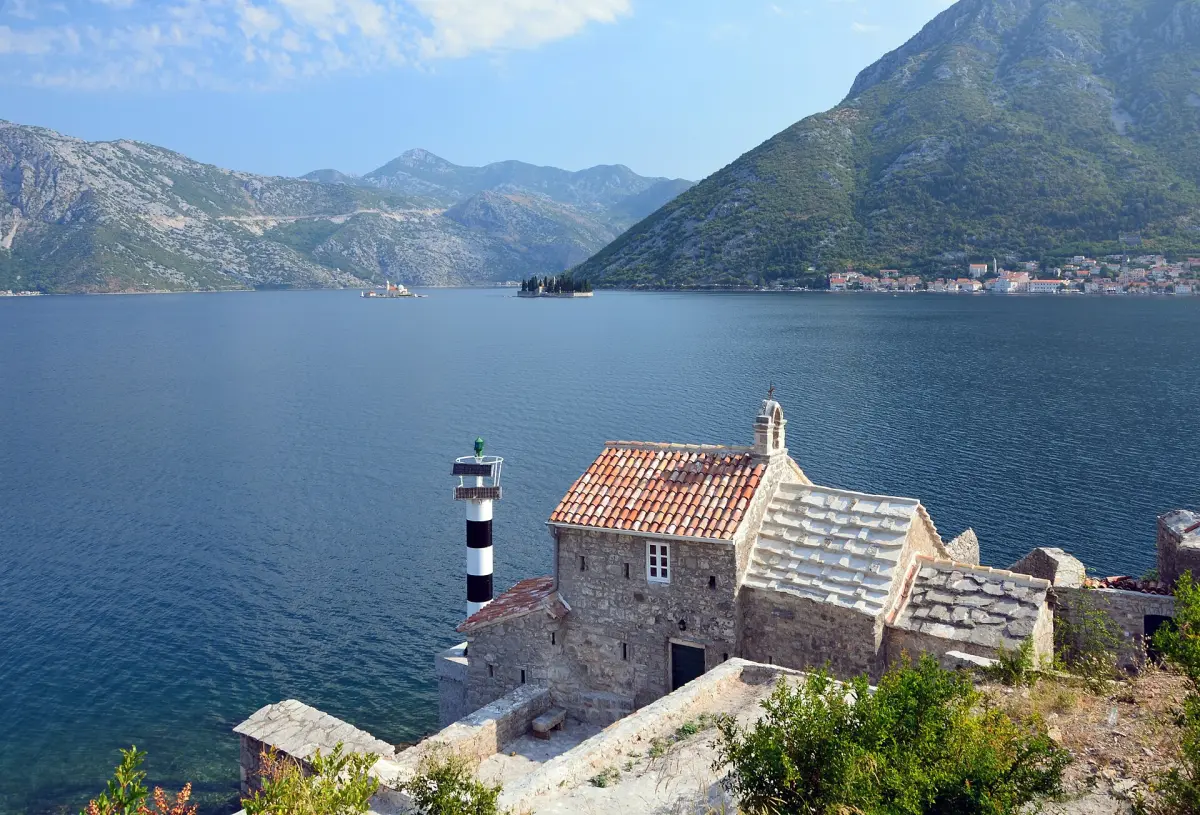
The Bay of Kotor. A drowned river canyon that looks like a fjord, ringed by Venetian-era towns. Kotor's walled old town and the climb up its fortress walls to San Giovanni are the headline, but Perast - a single street of palaces facing two tiny islands, one of them the man-made Our Lady of the Rocks - is the more beautiful stop, and Herceg Novi at the mouth of the bay is the one locals prefer. The whole bay is a UNESCO site.
The coast. Budva has the old town and the nightlife, Petrovac the calmer family beach, and Sveti Stefan the famous island-village, which is a private hotel - the island itself is for hotel guests, but the walk along the isthmus and the public beaches either side are open to everyone. Further south, Ulcinj has long sandy beaches and a distinctly Albanian feel.
The old royal capital and Lake Skadar. Cetinje was the capital under the Petrović dynasty and still has the embassies-turned-museums to prove it; above it, the mausoleum of Njegoš sits on top of Mount Lovćen with one of the great views of the Balkans. Lake Skadar, shared with Albania, is a national park of water lilies, pelicans and villages like Virpazar and Rijeka Crnojevića.
The north. Durmitor National Park around Žabljak, with the Black Lake, glacial cirques and the 1,300 m-deep Tara canyon, crossed by the Đurđevića Tara bridge. Biogradska Gora, one of the last primeval forests in Europe, is a few hours east. Ostrog Monastery, built into a cliff face, sits on the road between the coast and the mountains and is the most important pilgrimage site in the country.
Where nobody goes, and should
The Durmitor ring road is the single best drive in the country and most visitors never do it: a loop from Žabljak over the Sedlo pass and through the high Pivska plateau, above 1,900 m, with barely a car on it. Continue to the Piva canyon and its lake, where the road threads more than 50 unlit tunnels cut straight through the rock. The road is open roughly June to October.
On the coast, the Luštica peninsula, between the bay and the open sea, still has villages, olive groves and small beaches that have not been built over. And the Prokletije mountains around Plav and Gusinje, on the Albanian border, are some of the least-walked high mountains in Europe - rough, remote and extraordinary.
What to eat and drink
On the coast, Montenegrin food is Adriatic: grilled fish, black risotto, octopus, mussels from the bay and good olive oil. Inland it turns mountain: Njeguški pršut (smoked ham from the village of Njeguši, above Kotor) with Njeguški cheese, kačamak (a heavy cornmeal and potato dish with kajmak and cheese), lamb cooked 'ispod sača' under an iron lid in embers, and fresh trout from the lakes.
The local red is Vranac, big and inky, grown mostly around Lake Skadar and Podgorica; the white is Krstač. Rakija - fruit brandy - arrives at every serious meal, and the grape one is called loza.
Where everything is
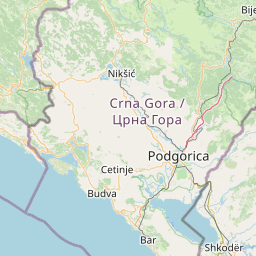
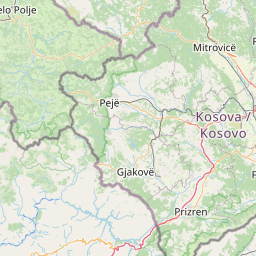
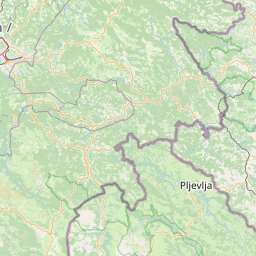
Every place named in this guide, on one map. Distances here are short - that is the whole planning trick.
Montenegro itineraries, by the kind of traveller you are
Four plans for the same country. They are written as schedules because the hard part here is not what to see, it is what order to see it in.
First time here
5 days
Three nights on the bay (Perast or Kotor), two in Žabljak
Day 1Kotor. The old town early, before the cruise-ship crowds, then the fortress walls to San Giovanni - 1,350 steps, or go at sunset. Eat in the old town or in Dobrota along the water.
Day 2Around the bay. Perast and a boat to Our Lady of the Rocks, then round to Herceg Novi. Or take the tiny car ferry across the Verige strait from Kamenari to Lepetane.
Day 3Lovćen and Cetinje. The serpentine road above Kotor with its 25 hairpins, lunch in Njeguši, the Njegoš mausoleum on Lovćen, and Cetinje's old embassies. Budva for the evening, if you want it.
Day 4To the mountains via Ostrog. Ostrog Monastery in its cliff, then north through the canyon country to Žabljak. Sleep in a wooden guesthouse.
Day 5Durmitor. The walk around the Black Lake in the morning, the Đurđevića Tara bridge, and the ring road over the Sedlo pass if it is open.
With only a weekend: stay on the bay and do Kotor, Perast and the Lovćen road. Leave the north for a trip with more time.
Hikers and rafters
5 days
Four nights in Žabljak or Plužine, one flexible
Day 1Black Lake and Savin Kuk. A warm-up loop round the lake, then the lift up Savin Kuk in summer for the ridge.
Day 2Bobotov Kuk. Durmitor's highest summit at 2,523 m, a long day from the Sedlo pass. Start early, carry water, and watch for afternoon storms.
Day 3Raft the Tara. Most trips put in near Šćepan Polje on the Bosnian border; spring has the biggest water. Go with a licensed operator.
Day 4The Piva plateau and canyon. Drive the tunnels along Lake Piva, walk to a viewpoint on the plateau, and swim if you are brave - the water is cold.
Day 5Biogradska Gora. An easy loop round Biogradsko Lake through old-growth beech and fir. A long drive east, and worth it.
The mountains are high and the weather changes fast. Summer storms are common in the afternoon; plan summits for mornings.
Slow, with food and a boat
4 days
Two nights on Lake Skadar, two on the Luštica peninsula
Day 1Virpazar. A wine-cellar lunch with Vranac, then an evening boat on the lake among the water lilies.
Day 2Rijeka Crnojevića and the lake villages. The old stone bridge, the view from Pavlova Strana over the river's hairpin, and a slow drive along the lake's southern shore.
Day 3Luštica. Olive groves, small coves and fish grilled by the people who caught it. Rose and Žanjice are the easy beaches.
Day 4Perast. Arrive late in the afternoon when the day-trippers leave, and watch the islands go gold.
This trip is best in May, June and September, when the lake is green and the bay is calm.
With kids
4 days
One base on the coast
Day 1Beach day in Petrovac. A sheltered bay with a promenade and shallow water. Easy parking and ice cream every 20 metres.
Day 2A boat on the bay. Perast and Our Lady of the Rocks, with the island's own small museum and the story of how it was built stone by stone.
Day 3Kotor's walls (partway). The first section up to the Church of Our Lady of Remedy is enough for small legs, and the view is already spectacular.
Day 4Lake Skadar. A boat trip with pelicans, and lunch in Virpazar.
Things to do in Montenegro
Climb Kotor's fortress wallsKotorPaid entry, 1,350 steps. Early morning or sunset beats midday by a mile.
Take a boat to Our Lady of the RocksPerastWater taxis leave from the waterfront all day in season.
Raft the Tara canyonŠćepan Polje, northMay and June for big water. Licensed operators only.
Drive the Durmitor ring roadŽabljak - Sedlo pass - PlužineOpen roughly June to October. Allow a full day.
Visit a cliff monasteryOstrogDress modestly. The upper monastery is a steep walk from the car park.
Boat through water liliesLake Skadar, from VirpazarEvening trips have the best light and the most birds.
Swim at the mouth of the bayLuštica peninsulaQuieter coves than the Budva Riviera, even in summer.
Walk the Black LakeDurmitor National ParkAn easy hour-long loop. Park entry is paid.
What our explorers actually reached
23 explorers with public maps have marked Montenegro, and 6 of them went on to mark the municipalities they reached. The typical one reached 4.5 of 21 - 21% of the country - and the most thorough quarter reached 38% or more. Between them, 6 municipalities still have no mark from anyone.
Typical explorer 21% · top quarter 38%+
The municipalities they marked most: Kotor, Budva, Podgorica, Cetinje, Bar.
And where they went instead
91% of explorers who marked Montenegro also marked Croatia (vs 38% of everyone)
65% of explorers who marked Montenegro also marked Bosnia and Herzegovina (vs 17% of everyone)
52% of explorers who marked Montenegro also marked Albania (vs 15% of everyone)
Read these as marks on maps, not as reviews: our explorers skew European, and a country nobody has marked is not a country worth skipping. Aggregates only, never an individual, and only from accounts that are public. Read on 24 September 2026.
Practicalities
Money and borders
Montenegro uses the euro but is not in the EU or Schengen. Crossing from Croatia means an EU external border, and since April 2026 the Entry/Exit System registers non-EU travellers there, which can slow coaches in summer.
Driving
A car is close to essential beyond the coast. Mountain roads are narrow with many blind bends and tunnels; drive slowly and use the horn on hairpins. Headlights must be on at all times.
Buses
Buses connect the coastal towns, Podgorica and Žabljak reliably and cheaply. The Bar-Belgrade railway through the canyons is scenic but slow.
Registration
Visitors must be registered with the local tourist organisation within 24 hours of arrival. Hotels and most rentals do it for you and add a small nightly tourist tax.
Flights, hotels and getting around
Tivat (TIV) is the main way in. Podgorica (TGD) is the other airport, and Dubrovnik is 90 minutes up the coast.
These are plain searches on other people's sites - no affiliate tags, no tracking, and we earn nothing if you book. If that ever changes, this line changes with it.
Other people worth reading
We are a map, not a guidebook, and these are better than us on the parts we are thin on. Hand-picked, nothing sponsored, nothing scraped.
MontenegroWikivoyagePractical and up to date on buses, borders and prices.
Durmitor National ParkWikivoyageThe mountain half of the country, with the trails and road notes.
Montenegro Travelmontenegro.travelThe national tourist board. Good for events and the national parks.
Bay of KotorUNESCOWhy the bay and its towns are protected, and what that covers.
Common questions
How many days do you need in Montenegro?
Three days covers the Bay of Kotor and the Lovćen road. Five to seven lets you add Durmitor and the Tara canyon, which is where the country is at its most striking - and only three hours from the coast.
Kotor or Budva as a base?
Kotor, or better Perast or Dobrota on the same bay, if you want scenery and old towns. Budva if you want beaches and nightlife. Both are an easy 30-minute drive apart, so the base matters less than when you visit Kotor's old town - early or late, not when the cruise ships are in.
Can you visit Sveti Stefan?
The island is a private resort and only hotel guests can go inside. Anyone can walk the isthmus to the gate and use the public beaches on either side, and the view from the road above is the famous one.
Is Montenegro expensive?
Cheaper than Croatia next door for food and accommodation, especially away from Kotor and Budva in summer. Montenegro uses the euro, so there is no exchange to worry about.
Been to Montenegro?
Mark it, and the municipalities you reached, and your own map starts answering this question for you.