Iceland is a young island still being built: it sits on the Mid-Atlantic Ridge, where the North American and Eurasian plates pull apart, and it has had a dozen eruptions on the Reykjanes peninsula alone since 2021. It is 103,000 km² - a little bigger than Portugal - with fewer than 400,000 people, most of them in and around Reykjavík. The rest is lava fields, glaciers, black beaches, waterfalls and a single road, Route 1, that circles the whole country in 1,322 km.
Most visits fall into two shapes: the south coast and the Golden Circle from a Reykjavík base, or the full Ring Road in a week or more. Both work. The mistake is trying to do the Ring Road in four days and seeing it through a windscreen; Iceland rewards stopping more than driving.
When to go, honestly
June to August is summer: nearly 24-hour daylight around the solstice, all roads open including the highland F-roads (usually from late June), puffins on the cliffs, and the highest prices and the busiest viewpoints. September is excellent - autumn colour, fewer people, and the first northern lights once the nights get dark. May is lovely and cheaper but the highlands are still closed.
October to March is northern-lights season, and the ice caves inside Vatnajökull's glaciers are only safe to visit in winter with a guide. Winter days are short - about four hours of daylight in late December - and weather closes roads, so a Ring Road trip in winter needs slack in the schedule and a 4x4. The south coast from Reykjavík is doable all year.
The Iceland you can actually fit in
Iceland is best thought of as a loop of regions, each a day or two from the last.
Reykjavík and Reykjanes. A small, colourful capital with Hallgrímskirkja, the Harpa concert hall and a very good food and bar scene. The Reykjanes peninsula, between the city and the airport, is where the recent eruptions have been; the Blue Lagoon and Grindavík are open, and new lava fields from the 2023-2025 Sundhnúkur eruptions are visible from the roads.
The Golden Circle. The classic day loop: Þingvellir, where the Althing parliament met from 930 and where you can walk (or snorkel, in Silfra) in the rift between the plates; the Geysir area, where Strokkur erupts every few minutes; and Gullfoss, a two-tier waterfall into a canyon.
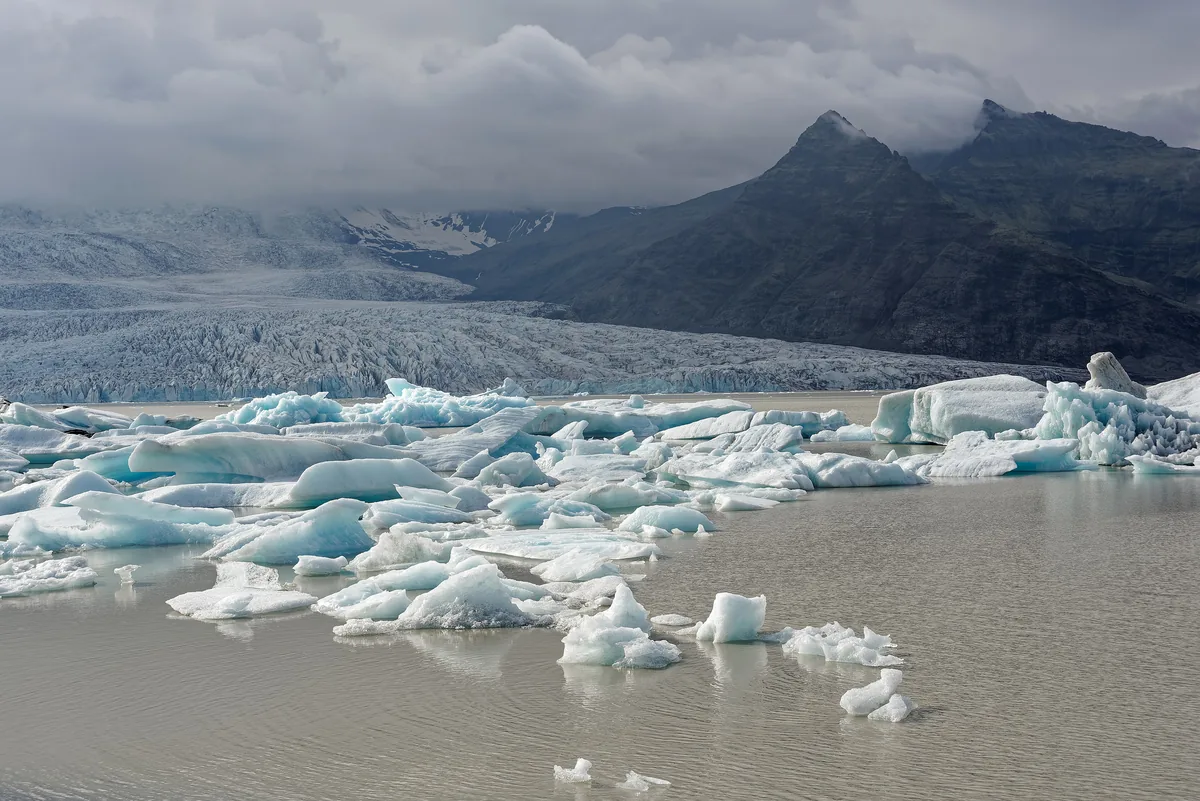
The south coast. Seljalandsfoss (which you can walk behind), Skógafoss, the black sand of Reynisfjara with its basalt columns and dangerous waves, Vík, and then the glaciers: Skaftafell, and the glacier lagoons of Jökulsárlón and Fjallsárlón, where icebergs calve into the water and wash up on Diamond Beach.
The north and east. Lake Mývatn and its lava landscape, the mud pots at Hverir, Dettifoss - the most powerful waterfall in Europe - and Ásbyrgi canyon; Húsavík for whale watching; Akureyri, the north's small capital; and the quiet East Fjords.
The west. The Snæfellsnes peninsula, sometimes called Iceland in miniature: Kirkjufell's cone, the Snæfellsjökull glacier-volcano, fishing villages and seal beaches. Beyond it, the Westfjords are wild, remote and worth a trip of their own.
Where nobody goes, and should
The Westfjords get a small share of Iceland's visitors and have the best of what people come for: huge empty fjords, the Dynjandi waterfall spilling down a mountainside in tiers, the red Rauðisandur beach, the bird cliffs of Látrabjarg, and hot pools in the middle of nowhere. The roads are slower and some are gravel, which is exactly why they stay quiet.
Closer in, skip the queue at the biggest waterfalls once and walk into the Fjaðrárgljúfur canyon or up to Múlagljúfur, a canyon east of Skaftafell with two waterfalls and far fewer people. And instead of the Blue Lagoon, try a local geothermal pool - every town has one, and they are how Icelanders actually spend an evening.
What to eat and drink
Icelandic food is fish and lamb, and both are excellent: langoustine soup in Stokkseyri, plokkfiskur (a fish and potato stew), Arctic char, and lamb that grazes free all summer. Skyr, the thick strained dairy, is everywhere. The famous hot dogs (pylsur) at Bæjarins Beztu in Reykjavík are worth the queue once. Fermented shark (hákarl) and dried fish (harðfiskur) are for the curious.
Iceland is expensive to eat in: a main course in a sit-down restaurant is often €30-45. Supermarkets like Bónus and Krónan make self-catering easy, and petrol-station grills are a genuine Icelandic institution. Tap water is some of the best in the world - never buy bottled.
Where everything is
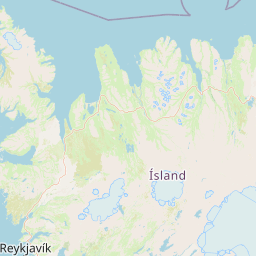
Every place named in this guide, on one map. Distances here are short - that is the whole planning trick.
Iceland itineraries, by the kind of traveller you are
Four plans for the same country. They are written as schedules because the hard part here is not what to see, it is what order to see it in.
First time here
5 days
Two nights Reykjavík, three on the south coast
Day 1Reykjavík. Hallgrímskirkja's tower, the harbour, Harpa, and an evening at a geothermal pool like Sundhöllin or Vesturbæjarlaug.
Day 2The Golden Circle. Þingvellir first, then Geysir and Gullfoss. Add the Secret Lagoon at Flúðir or the Kerið crater on the way back.
Day 3South coast waterfalls. Seljalandsfoss and Gljúfrabúi hidden beside it, then Skógafoss and the trail up beside it. Sleep near Vík.
Day 4Black sand and glaciers. Reynisfjara early - stay well back from the water; sneaker waves have killed visitors - then Fjaðrárgljúfur and on to Skaftafell.
Day 5The glacier lagoons. Fjallsárlón, Jökulsárlón and Diamond Beach, then the long drive back west, or push on round the Ring Road.
With only a weekend: Reykjavík, the Golden Circle and a pool. The south coast deserves at least two days.
The full Ring Road
9 days
A car and a clockwise loop
Day 1Reykjavík and the Golden Circle. Pick up the car, drive the Golden Circle, sleep near Selfoss.
Day 2Waterfalls to Vík. Seljalandsfoss, Skógafoss, Dyrhólaey, Reynisfjara.
Day 3To the glaciers. Fjaðrárgljúfur, Skaftafell's Svartifoss walk, and the lagoons at sunset.
Day 4The East Fjords. Along the coast via Höfn - eat langoustine - to Seyðisfjörður.
Day 5Mývatn. Hverir's mud pots, Dimmuborgir's lava formations, and the Mývatn Nature Baths.
Day 6Dettifoss and Húsavík. Europe's most powerful waterfall, then a whale-watching boat from Húsavík.
Day 7Akureyri. Goðafoss on the way, and an evening in the north's little capital.
Day 8To Snæfellsnes. A long drive west to Kirkjufell and Grundarfjörður.
Day 9Around the peninsula. Arnarstapi's cliffs, Djúpalónssandur beach, and back to Reykjavík.
Nine days is the comfortable minimum. Since January 2026 all cars pay a per-kilometre road fee, which rental companies add to the bill - on a full loop, expect around 1,500-2,000 km.
Hikers and adventure
5 days
Summer only, with a guide for the ice
Day 1Glacier walk. A guided hike on Sólheimajökull or Falljökull with crampons. Never walk on a glacier without a guide.
Day 2Fimmvörðuháls. Skógar to Þórsmörk over the pass between two glaciers and the 2010 eruption craters - a long, spectacular day.
Day 3Þórsmörk. The valley of Thor, reached by a mountain bus; day hikes from the huts.
Day 4Landmannalaugar. Rhyolite mountains in every colour and a natural hot river to bathe in at the end of the day.
Day 5Snorkel Silfra. Drysuit snorkelling between the continental plates in water of astonishing clarity, at about 2-4°C.
The four-day Laugavegur trek from Landmannalaugar to Þórsmörk is the classic multi-day hike; huts must be booked months ahead.
With kids
4 days
Reykjavík as a base
Day 1Pools and the whales museum. A geothermal pool with slides, and Whales of Iceland's life-size models.
Day 2Golden Circle. Strokkur geyser erupting every few minutes is an easy win.
Day 3Waterfalls. Walking behind Seljalandsfoss in waterproofs is the thing they will remember.
Day 4Perlan. An indoor ice cave and a glacier exhibition, and a view over the city.
Things to do in Iceland
Walk between two continentsÞingvellir National ParkOr snorkel Silfra in a drysuit.
Watch icebergs float out to seaJökulsárlón and FjallsárlónBoat trips in summer; Diamond Beach across the road.
Walk behind a waterfallSeljalandsfossWear waterproofs. The path is slippery.
Hike on a glacierSólheimajökull or SkaftafellOnly with a certified guide.
See the northern lightsAnywhere dark, September to MarchClear skies matter more than location. Check the aurora forecast at vedur.is.
Go whale watchingHúsavíkHumpbacks are common in summer.
Bathe in a hot riverReykjadalur, near HveragerðiAn hour's walk up a steaming valley. Free.
Enter an ice caveVatnajökullWinter only, guided only.
What our explorers actually reached
21 explorers with public maps have marked Iceland, and 8 of them went on to mark the regions they reached. The typical one reached 4 of 9 - 44% of the country - and the most thorough quarter reached 67% or more.
Typical explorer 44% · top quarter 67%+
The regions they marked most: Reykjavík, Suðurnes, Höfuðborgarsvæði, Suðurland, Austurland.
And where they went instead
71% of explorers who marked Iceland also marked Ireland (vs 35% of everyone)
71% of explorers who marked Iceland also marked Sweden (vs 32% of everyone)
62% of explorers who marked Iceland also marked Finland (vs 29% of everyone)
Read these as marks on maps, not as reviews: our explorers skew European, and a country nobody has marked is not a country worth skipping. Aggregates only, never an individual, and only from accounts that are public. Read on 24 September 2026.
Practicalities
Driving
A 2WD is fine for Route 1 in summer; F-roads into the highlands legally require a 4x4 and open around late June. Check road.is and safetravel.is every morning - wind and weather close roads without warning, and gusts can tear off car doors.
Road fee
Since 1 January 2026 every vehicle pays a per-kilometre road charge instead of fuel duty (about 7 ISK per km for a normal car). Rental companies calculate it and bill it at the end.
Money
Icelandic króna (ISK). Cards and phone payments work everywhere, including the smallest petrol pump; many visitors never touch cash.
Volcanoes
Eruptions on the Reykjanes peninsula have been frequent since 2021 and more are expected. They are localised, flights and the Ring Road have not been affected, and safetravel.is posts any closures.
Flights, hotels and getting around
Reykjavík (KEF) is the main way in. Keflavík is 50 minutes from the city and there is no second option worth the detour.
These are plain searches on other people's sites - no affiliate tags, no tracking, and we earn nothing if you book. If that ever changes, this line changes with it.
Other people worth reading
We are a map, not a guidebook, and these are better than us on the parts we are thin on. Hand-picked, nothing sponsored, nothing scraped.
IcelandWikivoyageHonest and practical, especially on costs and driving.
Safe Travelsafetravel.isIceland's official safety site: road closures, weather alerts, and trip plans you can leave with rescuers.
Road conditionsroad.isLive road status - the site everyone checks before driving.
Aurora forecastvedur.isThe Met Office's cloud-cover and aurora forecast.
Visit Icelandvisiticeland.comThe tourist board, with region-by-region detail.
Common questions
How many days do you need in Iceland?
Four or five days covers Reykjavík, the Golden Circle and the south coast as far as the glacier lagoons. The full Ring Road needs at least eight or nine days to be enjoyable, and the Westfjords deserve several more.
Is it safe to visit Iceland with the volcanoes?
Yes. The eruptions since 2021 have been on the Reykjanes peninsula, near Grindavík, and have not affected flights, Reykjavík or the Ring Road. The Blue Lagoon and Grindavík are open, and the authorities close areas quickly when needed.
When can you see the northern lights?
From roughly September to March, on clear, dark nights. Get away from city lights and check the Icelandic Met Office's aurora forecast. Summer nights are too bright.
Do you need a 4x4?
Not for Route 1, the Golden Circle or Snæfellsnes in summer. You do for the highland F-roads, and a 4x4 is strongly advisable anywhere outside Reykjavík in winter.
Been to Iceland?
Mark it, and the regions you reached, and your own map starts answering this question for you.