Vietnam is a long, thin S of a country, about 1,650 km from the Chinese border to the Mekong Delta, and the classic trip runs down it: Hanoi and the karst bays of the north, the old imperial city of Huế and the lantern town of Hội An in the middle, and Ho Chi Minh City and the Mekong in the south. The food alone would justify the flight.
The middle is the part most people rush. Huế, the Hải Vân pass, Hội An and the caves of Phong Nha get a day each on too many itineraries, and they are where the country slows down enough to enjoy. The other thing to know before planning: the north, centre and south have different weather at the same time of year, so 'when to go' depends on where you are going.
When to go, honestly
The north (Hanoi, Hạ Long, Sa Pa, Hà Giang) is best from October to December and March to May; it has a genuinely cool, grey winter from December to February and a hot, rainy summer. The centre (Huế, Hội An, Đà Nẵng) is best from February to August, and its rainy and typhoon season runs from about September to December, when Hội An's old town can flood. The south (Ho Chi Minh City, the Mekong, Phú Quốc) is warm all year, dry from December to April and wet, in short afternoon downpours, from May to November.
There is no month that is perfect everywhere, but February to April comes closest for a north-to-south trip. Tết, the lunar new year (17 February in 2026, 6 February in 2027), is the biggest holiday of the year: transport is booked solid for days either side and many family-run places close.
Five Vietnams
Five regions, from north to south. Two weeks covers three or four comfortably.
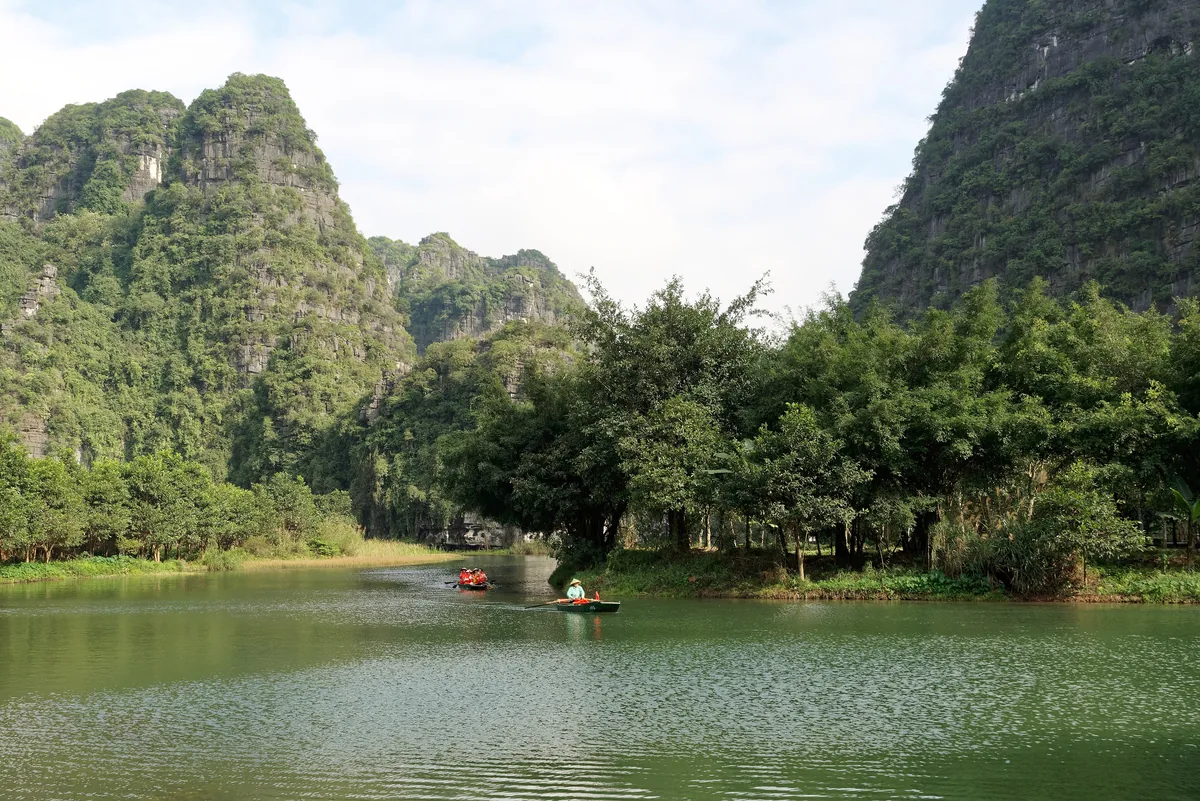
Hanoi and the north. Hanoi's Old Quarter of 36 guild streets, Hoàn Kiếm lake, the Temple of Literature and the Hỏa Lò prison; then the karst landscapes: Hạ Long and the quieter Lan Hạ Bay, and Ninh Bình, where you are rowed through caves and rice fields among limestone towers at Tràng An and Tam Cốc.
The northern mountains. Sa Pa's rice terraces and ethnic-minority villages, and the Hà Giang loop on the Chinese border - three or four days of mountain passes by motorbike, most people riding pillion behind a local 'easy rider' driver. It is one of the great road trips in Asia.
The centre. Phong Nha-Kẻ Bàng's caves, including Sơn Đoòng, the largest cave passage in the world (expeditions only, booked far ahead) and the easier Paradise Cave; Huế's citadel and royal tombs on the Perfume River; the Hải Vân pass over the mountains; and Hội An, a UNESCO-listed trading port of yellow shophouses and silk lanterns, with beaches and Đà Nẵng next door.
The south. Ho Chi Minh City (still Saigon to most people who live there) - the War Remnants Museum, the Củ Chi tunnels, street food and rooftop bars - and the Mekong Delta's river life, floating markets and orchards around Cần Thơ.
Islands and highlands. Phú Quốc for beaches, Côn Đảo for a quieter, wilder island with a heavy prison history, and Đà Lạt in the central highlands - cool, piney and a favourite of Vietnamese honeymooners.
Where nobody goes, and should
Cao Bằng, north-east of Hanoi, has the Bản Giốc waterfall on the Chinese border and karst valleys as spectacular as Hà Giang's with far fewer riders. In the centre, Quy Nhơn has long beaches, Cham towers and a relaxed seafood scene without the Đà Nẵng crowds.
One practical note for anyone using our map: in July 2025 Vietnam merged its 63 provinces into 34, so Hội An now sits inside Đà Nẵng city, Hà Giang inside Tuyên Quang province, and Ninh Bình absorbed its neighbours. The places are exactly where they were; only the names on the forms changed. Our region map still shows the older 63 provinces.
What to eat and drink
Every region has its own dishes. In Hanoi: phở for breakfast, bún chả (grilled pork with noodles) for lunch, and egg coffee. In Huế: bún bò Huế, a spicy beef noodle soup, and delicate royal-court rice cakes. In Hội An: cao lầu noodles and the bánh mì that made the town famous. In the south: cơm tấm (broken rice with grilled pork), fresh spring rolls and everything from the Mekong's fruit orchards.
Eat where it is busy, sit on the small plastic stools, and point. Vietnamese coffee - strong, dripped, over ice with condensed milk (cà phê sữa đá) - is a daily ritual, and bia hơi, fresh draught beer poured on Hanoi street corners, is among the cheapest beer in the world.
Where everything is
Every place named in this guide, on one map. Distances here are short - that is the whole planning trick.
Vietnam itineraries, by the kind of traveller you are
Four plans for the same country. They are written as schedules because the hard part here is not what to see, it is what order to see it in.
First time here
12 days
North to south: Hanoi, Ninh Bình, a bay, Huế, Hội An, Saigon
Days 1-2Hanoi. The Old Quarter on foot, a water-puppet show, the Temple of Literature, and a street-food evening.
Days 3-4Ninh Bình. A rowing boat through Tràng An's caves, cycling past rice fields at Tam Cốc, and the climb up Hang Múa for the view.
Days 5-6Lan Hạ or Hạ Long Bay. One night on a boat. Lan Hạ, reached from Cát Bà or Hai Phong, is quieter than central Hạ Long.
Days 7-8Huế. Fly or take the overnight train. The Imperial City, the tombs of Tự Đức and Khải Định, and a dragon boat on the Perfume River.
Days 9-10Hải Vân pass to Hội An. By car or motorbike over the pass, then two nights in Hội An: the old town at lantern-lit night, a tailor, An Bàng beach.
Days 11-12Ho Chi Minh City. The War Remnants Museum, the Củ Chi tunnels, and a Mekong day trip if you have the energy.
Domestic flights are cheap and quick; the Reunification Express train is the slow, scenic alternative between Hanoi, Huế, Đà Nẵng and Saigon.
Mountains and road trips
7 days
Hanoi, the Hà Giang loop, and Sa Pa
Day 1Hanoi to Hà Giang. An overnight or early sleeper bus north, about six to seven hours.
Days 2-4The Hà Giang loop. The Mã Pí Lèng pass above the Nho Quế river, Đồng Văn's old market town, and the Lũng Cú flag tower at the northernmost tip. Ride with an experienced driver unless you are a confident motorcyclist with a proper licence.
Day 5Back and across. A long transfer to Sa Pa, or back to Hanoi and the train to Lào Cai.
Days 6-7Sa Pa. Walks through the terraces of the Mường Hoa valley with a local Hmong or Dao guide, and a homestay night in a village.
Travel insurance often excludes motorbike riding without a valid licence for Vietnam. Check before you ride.
The centre, slowly
6 days
Phong Nha, Huế and Hội An
Days 1-2Phong Nha. Paradise Cave's 1 km boardwalk, and a kayak or zipline into Dark Cave. Multi-day cave expeditions must be booked months in advance.
Days 3-4Huế. The citadel, the royal tombs by bicycle, and bún bò Huế where it was invented.
Days 5-6Hội An. A cooking class with a market visit, the old town at dawn, and the lantern-lit river at night.
With kids
6 days
Hội An and Đà Nẵng as a base
Day 1Hội An. Lantern making, a basket-boat ride in the coconut palms at Cẩm Thanh.
Day 2Beach. An Bàng or Mỹ Khê in Đà Nẵng. Stick to flagged areas; the currents can be strong.
Day 3The Marble Mountains. Caves, pagodas and staircases inside limestone hills.
Day 4Bà Nà Hills. A cable car, the Golden Bridge held up by giant stone hands, and a small theme park.
Days 5-6Rest and swim. Resort pools and early dinners. The heat is the thing to plan around.
Things to do in Vietnam
Sleep on a boat among limestone islandsLan Hạ or Hạ Long BayOne night is the sweet spot; choose a reputable operator.
Row through caves under karst peaksTràng An, Ninh BìnhUNESCO-listed. Morning trips are cooler and calmer.
Ride the Hà Giang loopFar northThree to four days, best with a local driver.
Walk Hội An's lantern-lit old townHội AnA small ticket covers the historic houses.
See the world's biggest caveSơn Đoòng, Phong NhaExpedition-only, very expensive, booked a year or more ahead. Paradise Cave is the easy alternative.
Eat your way through HanoiOld QuarterA street-food tour on the first night helps you order alone after.
Crawl through the Củ Chi tunnelsNear Ho Chi Minh CityTight spaces; not for the claustrophobic.
Drive the Hải Vân passBetween Huế and Đà NẵngBy car, motorbike or the train line along the coast below it.
What our explorers actually reached
28 explorers with public maps have marked Vietnam, and 9 of them went on to mark the provinces they reached. The typical one reached 3 of 63 - 5% of the country - and the most thorough quarter reached 5% or more. Between them, 50 provinces still have no mark from anyone.
Typical explorer 5% · top quarter 5%+
The provinces they marked most: Hồ Chí Minh city, Ha Noi, Đà Nẵng, Quàng Nam, Kiên Giang.
And where they went instead
79% of explorers who marked Vietnam also marked Thailand (vs 29% of everyone)
75% of explorers who marked Vietnam also marked Malaysia (vs 23% of everyone)
46% of explorers who marked Vietnam also marked Cambodia (vs 12% of everyone)
Read these as marks on maps, not as reviews: our explorers skew European, and a country nobody has marked is not a country worth skipping. Aggregates only, never an individual, and only from accounts that are public. Read on 24 September 2026.
Practicalities
Visas
Citizens of more than 20 European countries - including the UK, France, Germany, Italy, Spain, the Nordics, Belgium, the Netherlands, Poland and Switzerland - plus Japan and South Korea can visit visa-free for 45 days under two schemes running to 2028. Everyone else can get a 90-day e-visa online from the official government portal; avoid look-alike agency sites.
Money
Vietnamese đồng (VND). Cash is still king for street food and markets; cards work in hotels and bigger restaurants. The many zeros take a day to get used to.
Getting around
Cheap domestic flights link the big cities; sleeper buses and the Reunification Express train cover the rest. Grab is the ride-hailing app everyone uses, for cars and motorbike taxis.
Crossing the street
Walk slowly and steadily, and the motorbikes flow around you. Do not stop suddenly or run.
Flights, hotels and getting around
Hanoi (HAN) is the main way in. Fly into Ho Chi Minh City (SGN) instead if you would rather go south to north. Da Nang (DAD) splits the country in half.
These are plain searches on other people's sites - no affiliate tags, no tracking, and we earn nothing if you book. If that ever changes, this line changes with it.
Other people worth reading
We are a map, not a guidebook, and these are better than us on the parts we are thin on. Hand-picked, nothing sponsored, nothing scraped.
VietnamWikivoyageDetailed and practical, especially on transport and scams.
Hà Giang LoopWikivoyageThe route day by day, with safety advice.
Two weeks covers Hanoi, Ninh Bình, a night in Hạ Long or Lan Hạ Bay, Huế, Hội An and Ho Chi Minh City at a comfortable pace. With ten days, pick the north and centre or the centre and south.
Do you need a visa for Vietnam?
Citizens of more than 20 European countries, plus Japan and South Korea, can visit visa-free for up to 45 days under schemes that run until 2028. Everyone else can apply online for a 90-day e-visa through the official government portal.
Hạ Long Bay or Lan Hạ Bay?
Hạ Long is the famous name and the busier water; Lan Hạ, next to Cát Bà island, has the same karst scenery with fewer boats and is better for kayaking. Many cruises now visit both.
What is the best time to visit Vietnam?
February to April is the best compromise for a north-to-south trip. The centre is best from February to August and gets heavy rain and typhoons from September to December; the north is cool and grey from December to February.
Been to Vietnam?
Mark it, and the provinces you reached, and your own map starts answering this question for you.