Most people meet Estonia as a day trip: a ferry from Helsinki, four hours inside Tallinn's walls, and back for dinner. That is a good day, but it is a sliver of a country that is half forest, has more than 2,000 islands and spends its summer evenings in a light that barely fades before midnight. Estonia is small - 45,000 km², about the size of Denmark - and flat enough that nowhere is more than a few hours' drive from the capital.
The trick is to leave Tallinn early. The islands of Saaremaa and Hiiumaa, the bogs of Soomaa and Lahemaa, the university town of Tartu and the Russian-speaking border city of Narva are all different countries in feel, and all within a day of each other. Few of them are crowded, even in July.
When to go, honestly
June to August is the season. Midsummer (Jaanipäev, 23-24 June) is the biggest holiday of the year: bonfires, beer and everyone at their summer house, which makes cities quiet and the countryside busy. Days are close to 19 hours long around the solstice. Late May and early September are cheaper and still mild, and the forests are at their best in September, when half the country goes mushroom and berry picking.
Winter is dark and cold, but Tallinn's Christmas market in Town Hall Square is one of the prettiest in the Baltics, and a proper snowy January brings cross-country skiing, ice roads to the islands in the hardest winters, and saunas that suddenly make complete sense. Spring brings the 'fifth season' in Soomaa, when snowmelt floods the forest and you can canoe between the trees.
Five Estonias
The country breaks into five quite different trips, none more than a few hours apart.
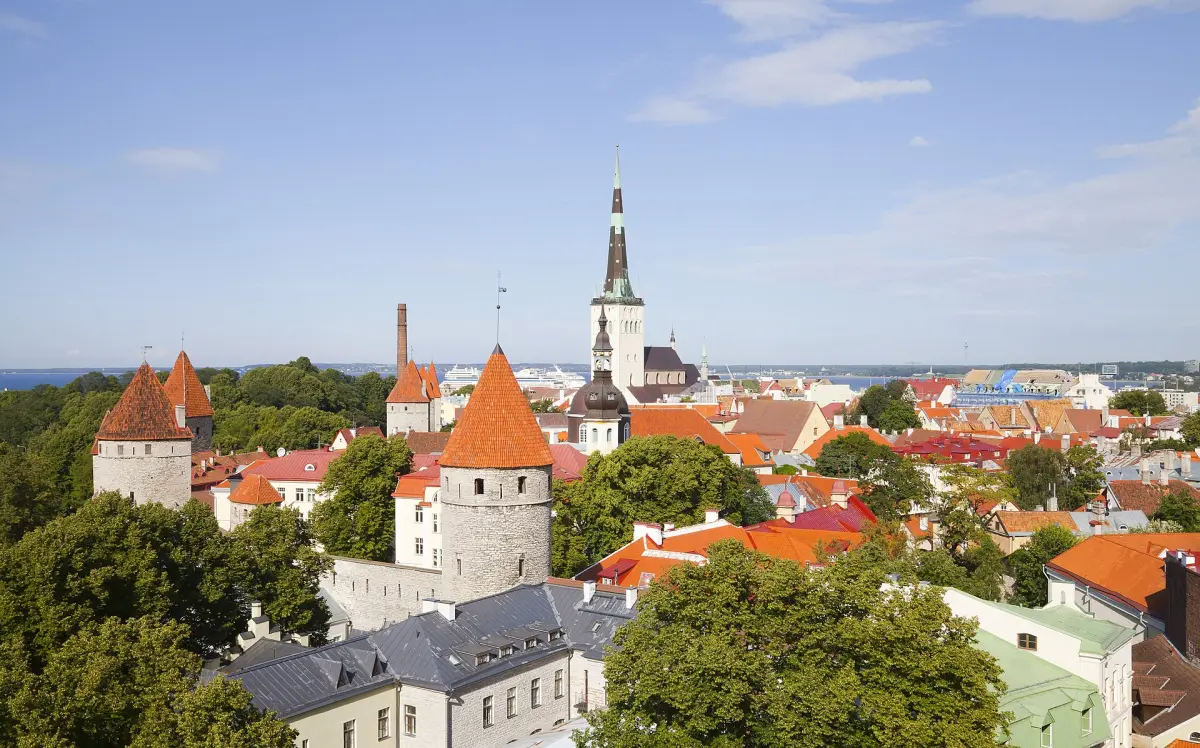
Tallinn. The walled Old Town is one of the best-preserved medieval centres in northern Europe, a UNESCO site with its towers, gates and Toompea hill mostly intact. Around it: Kalamaja's wooden houses and the Telliskivi creative quarter, the Seaplane Harbour museum in a 1917 concrete hangar, and Kadriorg's palace and park. Two days is plenty; one is enough if you only want the Old Town.
The north coast and Lahemaa. Estonia's first national park, an hour east of Tallinn. Manor houses at Palmse, Sagadi and Vihula, fishing villages like Altja and Käsmu, boulder-strewn capes, and the Viru bog boardwalk, which is the easiest way to see what a raised bog actually looks like.
The islands. Saaremaa is the big one: windmills at Angla, Kuressaare's bishop's castle, the Kaali meteorite crater and juniper-covered coast. Hiiumaa is quieter, with lighthouses (Kõpu is one of the oldest continuously working lighthouses in the world) and empty beaches. Muhu has the best food. Kihnu, off Pärnu, keeps a living culture on UNESCO's intangible heritage list.
Tartu and the south. Tartu is the university town and the intellectual capital, youthful and a bit bohemian; it was European Capital of Culture in 2024. South of it the land rises into hills and lakes around Otepää and Võru, with smoke saunas that are themselves on UNESCO's intangible list, and Setomaa on the Russian border, with its own language, singing and Orthodox villages.
Pärnu and the west. Pärnu is the summer capital: a long sandy beach, a spa-town past and a busy July. Inland is Soomaa, a national park of bogs and flooded forest, and to the north the coastal town of Haapsalu, with a castle and a white-lady legend.
Where nobody goes, and should
Narva, on the Russian border in the far north-east, is the least-visited city in the country and the most striking. The Hermann Castle faces Russia's Ivangorod fortress across a river, 150 metres apart; almost everyone around you speaks Russian, and the Kreenholm textile mill is a vast red-brick ruin being brought slowly back to life. It is two and a half hours from Tallinn by train and very little like anywhere else in the EU.
For nature, go to Soomaa instead of adding another town. A guided walk across the open bog on wide 'bog shoes', or a canoe trip in the spring flood shows you a landscape most of Europe drained centuries ago. And on the islands, Vilsandi National Park, off Saaremaa's west coast, is a seabird refuge you reach by boat or, at low water, by wading.
What to eat and drink
Estonian food is northern and seasonal: dark rye bread (leib) with everything, smoked fish from the coast, sprats on black bread, blood sausage at Christmas, and in summer, new potatoes with dill and sour cream that locals treat as an event. Kama, a roasted grain flour stirred into kefir, is the national breakfast oddity. Try kiluvõileib - a sprat, egg and rye open sandwich - at least once.
Tallinn has a serious restaurant scene for its size, much of it cooking with foraged Nordic ingredients, and Estonia's craft beer is excellent. Vana Tallinn, a sweet rum-based liqueur, is the souvenir everyone brings home and nobody drinks at home. On Muhu and Saaremaa, look for juniper-smoked everything and the local sweet bread.
Where everything is
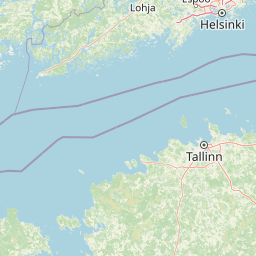
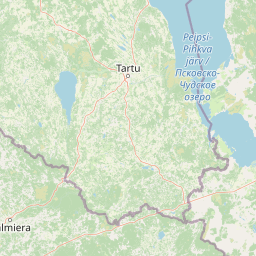
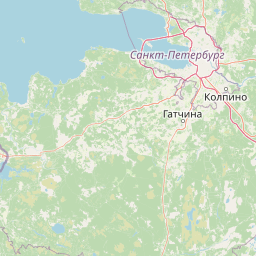
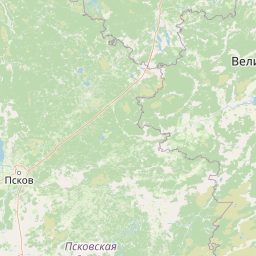
Every place named in this guide, on one map. Distances here are short - that is the whole planning trick.
Estonia itineraries, by the kind of traveller you are
Four plans for the same country. They are written as schedules because the hard part here is not what to see, it is what order to see it in.
First time here
4 days
Two nights Tallinn, one Lahemaa, one Tartu
Day 1Tallinn's Old Town. Town Hall Square, St Olaf's tower if you like stairs, Toompea's viewing platforms (Kohtuotsa and Patkuli), and the walls at the Nunnatorn. Eat in the Old Town once, then in Kalamaja.
Day 2Outside the walls. Seaplane Harbour in the morning, Telliskivi and Kalamaja for lunch, and Kadriorg in the afternoon. If you have the budget, a sauna evening.
Day 3Lahemaa. Drive or take a tour east: the Viru bog boardwalk early, Palmse manor, and Käsmu or Altja on the coast. Sleep in a manor or a farm stay.
Day 4Tartu. Two hours south. The Town Hall Square with its kissing students statue, Toome Hill, and the Estonian National Museum in its remarkable runway-shaped building. Train back to Tallinn in two hours.
With only a day from Helsinki: skip everything but the Old Town, Toompea and Kalamaja, and take an early ferry.
Islands and slow roads
5 days
A car, one night Haapsalu, two Saaremaa, two Hiiumaa
Day 1Tallinn to Haapsalu. An hour and a half west. Castle, promenade, and the old railway station with its absurdly long platform canopy, now a railway museum.
Day 2Muhu and into Saaremaa. The ferry from Virtsu to Muhu takes about half an hour; the causeway links Muhu to Saaremaa. Stop at Koguva village on Muhu, then the Angla windmills on your way to Kuressaare.
Day 3Saaremaa's edges. Kaali meteorite crater, the Panga cliffs, and the Sõrve peninsula down to the lighthouse at the tip. Kuressaare's castle in the evening light.
Day 4Across to Hiiumaa. Ferry from Triigi to Sõru, then Kõpu lighthouse and the long western coast. Hiiumaa has more lighthouses than traffic lights.
Day 5Back to the mainland. The Heltermaa-Rohuküla ferry, and Tallinn by evening. Book island ferries ahead on summer weekends - they fill with locals' cars.
Ferries are cheap, frequent and bookable online; on a Friday in July, take the booking seriously.
Nature and the outdoors
4 days
Base in Pärnu, then Soomaa, then the south-east
Day 1Pärnu. Beach, old town and a long walk on the pier to the river mouth. Easy first day.
Day 2Soomaa. A guided bog-shoe walk across a raised bog, or in spring, a canoe trip through flooded forest. Either way, go with a guide - bogs are not a place to improvise.
Day 3Otepää and the lakes. Rolling hills, lakes you can swim in, and a trail or two around Pühajärv. In winter this is the country's ski centre.
Day 4Võru and a smoke sauna. Book a traditional smoke sauna in Võrumaa - one of the few UNESCO-listed things you can experience in a towel - and finish at Suur Munamägi, the highest point in the Baltics at 318 m.
With kids
3 days
Tallinn as a base, one day out
Day 1Seaplane Harbour and the zoo. The museum has a real submarine to climb through and a sea-plane replica; Tallinn Zoo is big and fine for a half day.
Day 2The Old Town, playfully. Walls to climb, towers, and the Kiek in de Kök tunnels under the bastions. Keep it short and end at a café.
Day 3The coast. Pirita beach or Lahemaa's Viru bog, where the boardwalk and lookout tower make a bog walk feel like an adventure.
Estonia is exceptionally easy with children: short distances, calm traffic and English everywhere.
Things to do in Estonia
Walk Tallinn's walls and viewpointsOld Town and ToompeaGo early or late; cruise-ship days crowd the middle of the day.
Cross a raised bog on a boardwalkViru bog, LahemaaAn hour's walk, free, and a lookout tower at the end.
Take a bog-shoe or canoe tourSoomaa National ParkCanoeing is best in the April flood; bog-shoeing runs spring to autumn.
Sit in a smoke saunaVõrumaa, south-eastBook ahead; they take hours to heat. Bring a sense of humour and a towel.
Island-hop by car ferryMuhu, Saaremaa, HiiumaaCheap and frequent. Book on summer weekends.
Stand on the EU's edgeNarvaHermann Castle faces Russia's Ivangorod across the river.
Visit a runway-shaped museumEstonian National Museum, TartuBuilt on the end of a Soviet military airfield. Excellent.
Celebrate MidsummerAnywhere, 23 JuneBonfires, singing and Estonians at their happiest.
What our explorers actually reached
26 explorers with public maps have marked Estonia, and 12 of them went on to mark the counties they reached. The typical one reached 1 of 15 - 7% of the country - and the most thorough quarter reached 20% or more. Between them, 2 counties still have no mark from anyone.
Typical explorer 7% · top quarter 20%+
The counties they marked most: Harju, Pärnu, Lääne, Saare, Lääne-Viru.
And where they went instead
88% of explorers who marked Estonia also marked Finland (vs 29% of everyone)
65% of explorers who marked Estonia also marked Latvia (vs 18% of everyone)
77% of explorers who marked Estonia also marked Sweden (vs 32% of everyone)
Read these as marks on maps, not as reviews: our explorers skew European, and a country nobody has marked is not a country worth skipping. Aggregates only, never an individual, and only from accounts that are public. Read on 24 September 2026.
Practicalities
Getting around
Buses are the backbone and good; trains run Tallinn-Tartu, Tallinn-Narva and Tallinn-Pärnu. For the islands and the national parks, a car makes everything easier.
Money and language
Euro, Schengen. Estonian is a Finnic language, nothing like its neighbours; English is spoken almost universally by anyone under 50, and Russian widely in Tallinn and the north-east.
Digital everything
Estonia is famously digital: cards and phone payments work almost everywhere, parking is paid by app or SMS, and free Wi-Fi is the norm.
Borders
If you are arriving from outside Schengen, the EU's biometric Entry/Exit System has been fully running since April 2026, so the first crossing takes longer.
Flights, hotels and getting around
Tallinn (TLL) is the main way in. Helsinki is two hours away by ferry and often the cheaper way in; Riga is four by bus.
These are plain searches on other people's sites - no affiliate tags, no tracking, and we earn nothing if you book. If that ever changes, this line changes with it.
Other people worth reading
We are a map, not a guidebook, and these are better than us on the parts we are thin on. Hand-picked, nothing sponsored, nothing scraped.
EstoniaWikivoyageCommunity-written and practical on buses, ferries and prices.
SaaremaaWikivoyageThe big island in one page, with the ferry detail you need.
Visit Estoniavisitestonia.comThe tourist board. Strong on events and seasonal things like the Soomaa flood.
Estonian nature trailsloodusegakoos.eeThe state forest agency's map of free trails, boardwalks and campsites. The best free resource for the outdoors.
Island ferriespraamid.eeTimetables and bookings for the Saaremaa, Muhu and Hiiumaa ferries.
Common questions
How many days do you need in Estonia?
One day covers Tallinn's Old Town. Four days adds Lahemaa and Tartu comfortably. A week lets you add the islands of Saaremaa and Hiiumaa, which is where the country is at its most distinctive.
Is a day trip from Helsinki worth it?
Yes, for Tallinn's Old Town: the fast ferries take about two hours each way and run all day. But a day trip shows you a very small part of Estonia - even one night lets you see the Old Town at its quietest, early and late.
Do you need a car in Estonia?
Not for Tallinn, Tartu, Pärnu or Narva, which buses and trains connect well. For the islands, Lahemaa's villages and the national parks, a car saves a great deal of time.
When are the white nights?
From late May to mid-July the sky barely darkens at night, and around Midsummer on 23-24 June the sun sets after 10:30pm in Tallinn.
Been to Estonia?
Mark it, and the counties you reached, and your own map starts answering this question for you.