Bulgaria is one of the oldest countries in Europe - it has used its name for over 1,300 years - and one of the least understood. Visitors who know it at all know the Black Sea resorts or the ski slopes of Bansko. The country between them has Thracian gold, Roman theatres still in use, a painted monastery hidden in the Rila mountains, a Revival-era architecture found nowhere else, and some of the best hiking in the Balkans.
Two things changed recently. Bulgaria has been fully in the Schengen area since January 2025, and on 1 January 2026 it adopted the euro, retiring the lev after 146 years. It is still one of the cheapest countries in the EU to travel in, and one of the easiest to combine with Romania, Greece or North Macedonia.
When to go, honestly
Late May, June and September are the best months for most trips: warm, green, and the mountains open. The Rila lakes chairlift is most reliable from mid-June to early October, and high trails are usually snow-free from late June. July and August are hot in the plains and in Plovdiv (35°C is normal), which is exactly when the Black Sea and the mountains come into their own.
Late May and early June is rose season in the Valley of Roses around Kazanlak, where roses are still picked at dawn for rose oil, with a festival on the first weekend of June. Winter means skiing in Bansko, Borovets and Pamporovo, which are among the cheapest resorts in Europe.
Five Bulgarias
Five quite different trips, none more than a few hours from Sofia.
Sofia. A capital with Roman ruins exposed in its metro stations, the golden-domed Alexander Nevsky Cathedral, the 13th-century frescoes of Boyana Church (UNESCO), and Mount Vitosha rising straight out of its southern suburbs - you can take a bus from the centre to a hiking trail.
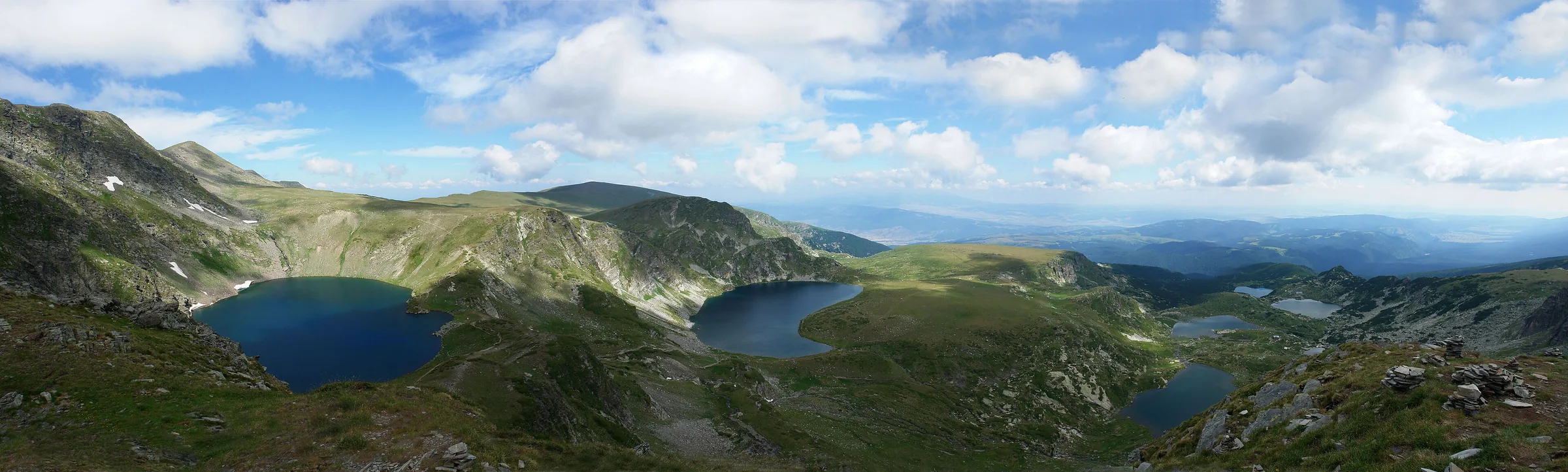
Rila and Pirin. The mountains. Rila Monastery, founded in the 10th century and rebuilt in the 1800s with striped arcades and a painted church, is the country's great national symbol. Above it, the Seven Rila Lakes are a string of glacial lakes stepping down a cirque, and Musala (2,925 m) is the highest peak in the Balkans. Pirin, to the south, is limestone and granite around Bansko and Vihren, with Melnik - a tiny town among sandstone pyramids and wine cellars - at its foot.
Plovdiv and the Thracian plain. Plovdiv is one of the oldest continuously inhabited cities in Europe, with a Roman theatre that still hosts summer opera, a Revival-era old town of painted merchants' houses, and the lively Kapana quarter. Around it are Thracian tombs, including the UNESCO-listed one at Kazanlak, and the Valley of Roses.
The old towns of the Balkan range. Veliko Tarnovo, the medieval capital, hangs above a looping river with the Tsarevets fortress on its hill. Koprivshtitsa, Tryavna, Arbanasi and Zheravna are villages of wooden Revival houses, and Belogradchik, in the north-west, has red rock pillars around a fortress built into them.
The Black Sea. Sunny Beach is the party resort. Nesebar, next to it, is a UNESCO-listed old town on a peninsula full of Byzantine churches; Sozopol is its quieter, prettier cousin; and north of Varna the coast turns to cliffs and small coves around Kaliakra and Balchik.
Where nobody goes, and should
The Rhodope mountains in the south are the least-visited and most distinctive region: deep gorges like Trigrad and the Devil's Throat cave, villages of Pomak Bulgarians, the Wonderful Bridges rock arches, and Perperikon, a Thracian rock sanctuary on a hilltop that was a cult centre for thousands of years. It is also where Bulgarian folk singing is still strongest.
In the north-west, Belogradchik's rocks and the Magura cave, with prehistoric bat-guano paintings, see a fraction of the visitors they deserve, and the nearby Danube town of Vidin has a proper medieval castle, Baba Vida, right on the river.
What to eat and drink
Start every meal with shopska salad - tomato, cucumber, peppers and a snowdrift of grated sirene cheese - and a glass of rakia. Then: banitsa (cheese pastry) for breakfast, tarator (cold yoghurt and cucumber soup) in summer, kavarma and kebapche (grilled minced meat) at any mehana, and in the mountains, patatnik, a potato and cheese pie from the Rhodopes. Bulgarian yoghurt, made with Lactobacillus bulgaricus, is the real thing.
The wine is old and good: mavrud and the broad-leaved Melnik grape among the reds, and dimyat and misket among the whites. Melnik's cellars dug into the sandstone are the most atmospheric place to taste them.
Where everything is
Every place named in this guide, on one map. Distances here are short - that is the whole planning trick.
Bulgaria itineraries, by the kind of traveller you are
Four plans for the same country. They are written as schedules because the hard part here is not what to see, it is what order to see it in.
First time here
6 days
Two nights Sofia, one Rila, two Plovdiv, one Veliko Tarnovo
Day 1Sofia. Alexander Nevsky Cathedral, the Serdika ruins in the metro, the Rotunda of St George in a courtyard behind the presidency, and Vitosha Boulevard in the evening.
Day 2Seven Rila Lakes. Two hours to Panichishte, the chairlift up, and the three-to-five-hour loop past the lakes. The chairlift starts late on Mondays - check the day.
Day 3Rila Monastery. An early start to see the courtyard before the tour groups. The small museum holds Rafail's Cross, carved with more than a hundred tiny scenes.
Day 4Plovdiv. The Roman theatre, the old town's painted houses, and dinner in Kapana.
Day 5The Valley of Roses. Kazanlak's Thracian tomb replica and rose museum, and the Shipka memorial church on the way north.
Day 6Veliko Tarnovo. Tsarevets fortress, the old craft street of Samovodska Charshia, and Arbanasi's churches up the hill.
In season, Tsarevets hosts a sound-and-light show on some evenings - worth timing a night around.
Hikers and mountain people
5 days
Two nights Bansko, two in Rila huts or Borovets, one flexible
Day 1Bansko. The old town's stone houses and a gentle afternoon walk out of town. Sleep well.
Day 2Vihren. Pirin's highest peak (2,914 m), a long day from the Vihren hut with a scramble near the top. Start at dawn.
Day 3To Rila. Across to Borovets and the gondola up towards Musala.
Day 4Musala. The highest point in the Balkans at 2,925 m, an achievable day from the top of the gondola in good weather.
Day 5Seven Rila Lakes. The classic loop, and down by chairlift to Panichishte.
Mountain huts are simple and cheap. Afternoon storms are common in July and August; summit early.
Slow, with wine and villages
5 days
Melnik, the Rhodopes, and Koprivshtitsa
Day 1Melnik. Walk into the sandstone pyramids and taste in the rock-cut cellars. Rozhen Monastery is an hour or so on foot.
Day 2Into the Rhodopes. Over the mountains to Trigrad; the Devil's Throat cave, with its underground waterfall, and the gorge.
Day 3Shiroka Laka and the Wonderful Bridges. A village of whitewashed houses and a music school for bagpipes, then the natural rock arches above Chepelare.
Day 4Plovdiv. A night in the old town.
Day 5Koprivshtitsa. The best-preserved Revival village in the country, with its merchants' houses open as museums.
With kids
4 days
Sozopol as a base, a day inland
Day 1Sozopol. Beaches, the old town on its peninsula, and a boat to St Ivan island if the sea is calm.
Day 2Nesebar. The old town's churches and windmill, and ice cream on the walls.
Day 3Beach day. The Black Sea shelves gently and has almost no tide - ideal for small children.
Day 4Burgas lakes. Pink salt lakes, flamingos at Atanasovsko, and the Poda bird-watching centre.
Things to do in Bulgaria
Walk the Seven Rila LakesRila, from PanichishteChairlift about €16 return; the loop takes three to five hours.
Visit Rila MonasteryRilaFree entry to the courtyard; modest dress in the church.
See opera in a Roman theatrePlovdivSummer evenings. Book ahead.
Climb the highest peak in the BalkansMusala, above BorovetsA day hike from the gondola in summer.
Taste wine in a sandstone cellarMelnikTry the local broad-leaved Melnik grape.
Walk a medieval citadelTsarevets, Veliko TarnovoThe sound-and-light show runs on some summer evenings.
Go underground at the Devil's ThroatTrigrad, RhodopesSteep steps up alongside a waterfall inside the cave.
Pick roses at dawnKazanlakLate May to early June, with a festival on the first weekend of June.
What our explorers actually reached
23 explorers with public maps have marked Bulgaria, and 11 of them went on to mark the provinces they reached. The typical one reached 3 of 28 - 11% of the country - and the most thorough quarter reached 14% or more. Between them, 8 provinces still have no mark from anyone.
Typical explorer 11% · top quarter 14%+
The provinces they marked most: Varna, Grad Sofiya, Burgas, Plovdiv, Sofia.
And where they went instead
74% of explorers who marked Bulgaria also marked Romania (vs 22% of everyone)
57% of explorers who marked Bulgaria also marked Montenegro (vs 18% of everyone)
48% of explorers who marked Bulgaria also marked Serbia (vs 17% of everyone)
Read these as marks on maps, not as reviews: our explorers skew European, and a country nobody has marked is not a country worth skipping. Aggregates only, never an individual, and only from accounts that are public. Read on 24 September 2026.
Practicalities
Money
The euro since 1 January 2026; the lev is no longer legal tender. Dual euro-lev price labels stay in shops until August 2026, which is a handy guide to what things used to cost.
A nod means no
Bulgarians traditionally shake the head for yes and nod for no. Many younger people switch for foreigners, which makes it more confusing, not less - say 'da' or 'ne' out loud.
Getting around
Buses are the best way between cities; trains are cheap and slow. You need an electronic vignette to drive on national roads, bought online before you set off. The Cyrillic alphabet is on every sign, usually with Latin transliteration on main roads.
Borders
Fully in Schengen since January 2025. From outside, the EU's Entry/Exit System registers non-EU travellers on the first crossing.
Flights, hotels and getting around
Sofia (SOF) is the main way in. Varna (VAR) and Burgas (BOJ) are the Black Sea coast, and seasonal from most of Europe.
These are plain searches on other people's sites - no affiliate tags, no tracking, and we earn nothing if you book. If that ever changes, this line changes with it.
Other people worth reading
We are a map, not a guidebook, and these are better than us on the parts we are thin on. Hand-picked, nothing sponsored, nothing scraped.
BulgariaWikivoyagePractical and good on buses, trains and Cyrillic.
RilaWikivoyageThe monastery, the mountains and how to get there.
Bulgaria Travelbulgariatravel.orgThe official tourism portal from the Ministry of Tourism.
Five or six days covers Sofia, Rila, Plovdiv and Veliko Tarnovo. Ten days lets you add the Rhodopes or the Black Sea, and a mountain day or two in Pirin.
Does Bulgaria use the euro?
Yes, since 1 January 2026. The lev was withdrawn and has not been legal tender since 1 February 2026. Prices are shown in both currencies until August 2026.
Can you do the Seven Rila Lakes as a day trip from Sofia?
Yes. It is about two hours by car to Panichishte, the chairlift takes about 20 minutes, and the loop past the lakes takes three to five hours. Start early, and check the chairlift schedule - it starts late on Mondays.
Is Bulgaria cheap?
It is one of the cheapest countries in the EU for food, transport and accommodation, even after joining the euro. The Black Sea resorts in August and ski resorts at New Year are the exceptions.
Been to Bulgaria?
Mark it, and the provinces you reached, and your own map starts answering this question for you.