Thailand is the country that taught a generation how to travel, and it is still one of the easiest and most rewarding places in the world to do it: temples covered in gold leaf, night markets, limestone islands, jungle in the north and food good enough to plan the whole trip around. It is a big country - 513,120 km², about the size of Spain - with 77 provinces and two coastlines, each with its own weather.
That second point decides more trips than people expect. The Andaman coast (Phuket, Krabi, Ko Lanta) and the Gulf of Thailand (Ko Samui, Ko Phangan, Ko Tao) have their rainy seasons at different times, so the right beach depends on the month. And the further you get from Bangkok and the famous islands, the more Thailand turns back into a country rather than a destination.
When to go, honestly
November to February is the best time for most of the country: dry, sunny and cooler, with Chiang Mai's nights genuinely fresh. It is also high season, with the highest prices on the islands around Christmas and New Year. March to May is the hot season - often 35°C and more in Bangkok - ending with Songkran, the water-throwing New Year festival, on 13 to 15 April.
June to October is the rainy season: usually heavy afternoon showers rather than all-day rain, green landscapes and lower prices, but rough seas on the Andaman coast, where some boat trips and national parks close. The Gulf islands follow a different pattern and get most of their rain from October to December, so in November the Andaman side is the better bet.
Five Thailands
Five regions, and a first trip usually combines Bangkok, the north and one coast.
Bangkok. Exhausting and addictive: the Grand Palace and the Emerald Buddha, the reclining Buddha of Wat Pho, Wat Arun across the river, the canals of Thonburi by long-tail boat, Chinatown's street food at night and the rooftop bars above it all. The river ferries and the Skytrain are the way to beat the traffic.
The north. Chiang Mai has more than 300 temples inside and around its old walled city, cooking schools, night markets and the mountain temple of Doi Suthep. Chiang Rai has the White Temple, Pai is the backpacker valley at the end of 762 bends, and Mae Hong Son and the Golden Triangle are the quieter edges.
The old capitals. Ayutthaya, a day trip from Bangkok, is a city of ruined temples and Buddha heads wrapped in tree roots. Sukhothai, further north, is older, greener and much calmer, best seen by bicycle. Kanchanaburi has the Bridge on the River Kwai, the Death Railway and the turquoise falls of Erawan.
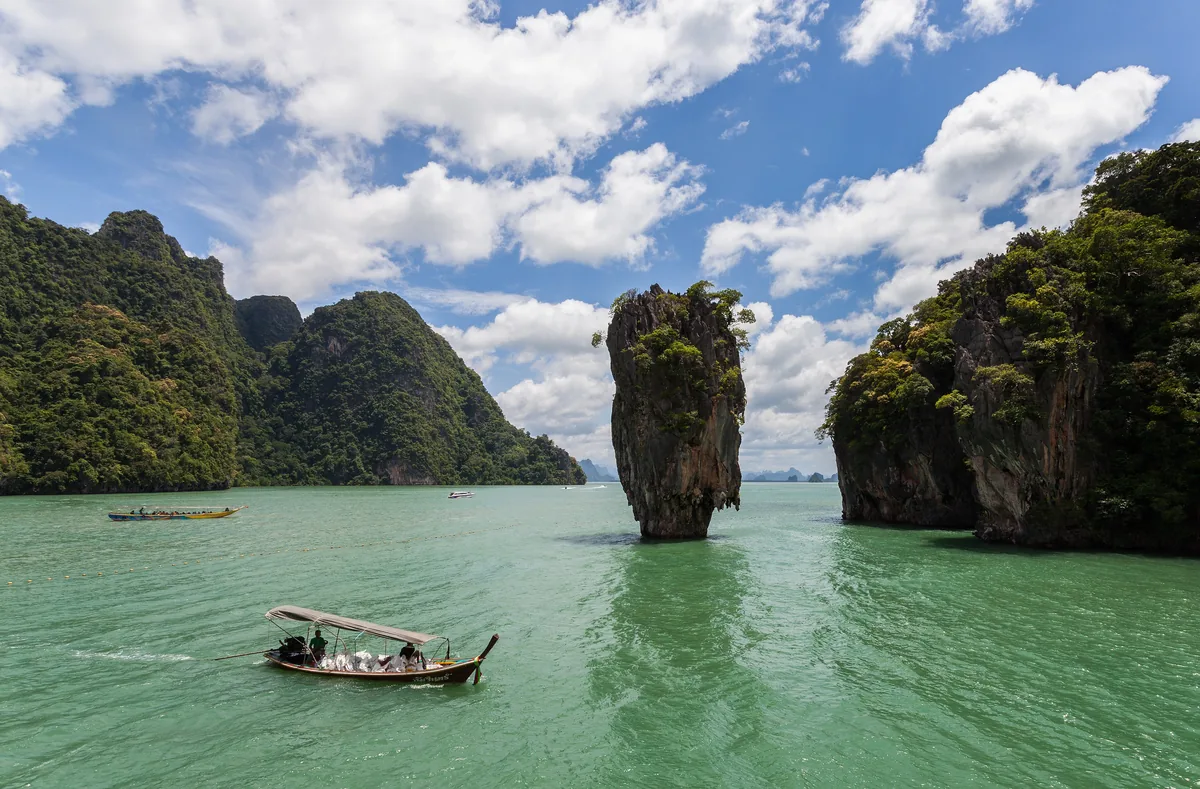
The Andaman coast. Limestone towers rising out of the sea: Phang Nga Bay, Railay's climbing cliffs near Krabi, the Phi Phi islands and the long beaches of Ko Lanta. Phuket is the airport and the busiest island. The Similan and Surin islands, open roughly mid-October to mid-May, are among the best diving in Asia.
The Gulf islands. Ko Samui is the comfortable one, with an airport and resorts, Ko Phangan has the Full Moon Party and much quieter northern beaches, and Ko Tao is where much of the world learns to dive. Closer to Bangkok, Hua Hin is the royal beach town and an easy weekend.
Where nobody goes, and should
Our explorers have marked 27 of Thailand's 77 provinces, and the typical one has been to three: Bangkok, Phuket and Surat Thani, which is where Ko Samui is. The northeast, Isan, is a third of the country and hardly appears on their maps.
Isan has the Khmer temples of Phanom Rung and Phimai, older than Angkor Wat in parts, Khao Yai's jungle and wild elephants three hours from Bangkok, and the Mekong at Nong Khai and Chiang Khan, where Laos is across the river. In the far north, Nan is a quiet valley town with some of the most beautiful temple murals in the country. And south of Krabi, the islands of Trang - Ko Kradan, Ko Mook and Ko Libong - are what Phi Phi was like before it was famous.
What to eat and drink
Street food is not a compromise here; it is the point. Pad kra pao (stir-fried holy basil with chilli and a fried egg), som tam papaya salad, tom yum soup, green and massaman curries, and mango sticky rice in season. The north has its own food: khao soi, a coconut curry noodle soup, and the fermented sausage sai ua. In the northeast, eat larb and grilled chicken with sticky rice.
Ask for 'mai phet' if you do not want it spicy - and believe it when someone says something is spicy. Drink bottled or filtered water, not tap water. Thai beers are Singha, Chang and Leo; alcohol sales are restricted at certain hours and on Buddhist holidays, so do not be surprised if a shop refuses in the afternoon.
Where everything is
Every place named in this guide, on one map. Distances here are short - that is the whole planning trick.
Thailand itineraries, by the kind of traveller you are
Four plans for the same country. They are written as schedules because the hard part here is not what to see, it is what order to see it in.
First time here
12 days
Three nights Bangkok, four in the north, four on the Andaman coast
Day 1Bangkok's temples. The Grand Palace when it opens, Wat Pho next door, then a ferry across to Wat Arun.
Day 2Canals and Chinatown. A long-tail boat through the Thonburi canals, then Chinatown's Yaowarat Road for dinner.
Day 3Ayutthaya. By train or minivan to the old capital; rent a bicycle among the ruins.
Days 4-5Chiang Mai. Fly or take the overnight train. The old city's temples, Doi Suthep at sunset, the Sunday walking street, and a cooking class.
Day 6Doi Inthanon or an elephant sanctuary. Thailand's highest mountain and its twin pagodas, or a day at a sanctuary where the elephants are not ridden.
Day 7Chiang Rai. The White Temple and the Blue Temple, then fly south from Chiang Rai or Chiang Mai.
Days 8-9Krabi and Railay. Railay's beaches, reachable only by boat, and the four-islands trip by long-tail.
Days 10-11Ko Lanta. Long beaches, a slower pace and a snorkelling trip to Ko Rok or the Trang islands.
Day 12Home. Back via Krabi or Phuket airport.
Travelling between January and September? Swap the Andaman coast for Ko Samui and Ko Tao if you prefer. From October to December the Gulf islands are at their wettest, so stay on the Andaman side.
The north, slowly
6 days
Chiang Mai, Pai, Mae Hong Son, back to Chiang Mai
Day 1Chiang Mai. The old city on foot, and the night bazaar.
Day 2To Pai. Three hours of mountain bends; the canyon at sunset.
Day 3Around Pai. Hot springs, waterfalls and the bamboo bridge through the rice fields.
Day 4Mae Hong Son. The Burmese-style temples by the lake, close to the Myanmar border.
Day 5Doi Inthanon. On the way back, the national park's waterfalls and the cloud forest summit trail.
Day 6Chiang Mai. A massage, a last khao soi and the flight out.
The Mae Hong Son loop has more than a thousand bends; take motion-sickness tablets for the minivans, or rent a car or a motorbike only if you are experienced.
Islands and diving
7 days
Ko Samui, Ko Phangan, Ko Tao (January to September)
Day 1Ko Samui. Fly in from Bangkok. Fisherman's Village in Bophut for the evening.
Day 2Ang Thong Marine Park. A boat day to the 42 islands of the marine park, with a climb to the viewpoint over the emerald lake.
Day 3Ko Phangan. Ferry over and head to the north coast beaches, far from the party.
Day 4Bottle Beach. Reachable by boat or a steep road: the quietest beach on the island.
Days 5-6Ko Tao. A discover-scuba day or a snorkelling trip around the island, and the viewpoint over Ko Nang Yuan.
Day 7Back. Ferry to Chumphon or Samui and onward to Bangkok.
With kids
6 days
Bangkok, Kanchanaburi and Hua Hin
Day 1Bangkok by boat. The Chao Phraya ferries are an adventure for children; Wat Pho's giant Buddha is a hit.
Day 2To Kanchanaburi. The bridge and the museum; ride the Death Railway train across the wooden viaduct.
Day 3Erawan falls. Seven tiers of turquoise pools to swim in. Arrive early.
Day 4To Hua Hin. A beach town with calm water, a night market and easy food.
Day 5Hua Hin. Beach, then the cave temple of Phraya Nakhon in Khao Sam Roi Yot park.
Day 6Back to Bangkok. Three to four hours by road or train.
Things to do in Thailand
Visit the Grand PalaceBangkokCovered shoulders and long trousers or skirts; ignore anyone outside who says it is closed.
Take a long-tail boat into Phang Nga BayKrabi, PhuketKayak into the hongs, the hidden lagoons inside the limestone islands.
Cook Thai foodChiang MaiMost classes start with a market visit.
Spend a day with elephantsAround Chiang MaiChoose a sanctuary that does not offer rides or shows.
Sleep in a floating raft houseKhao SokOn the Cheow Lan lake, surrounded by jungle.
Learn to diveKo TaoOne of the cheapest places in the world to get certified.
Watch Muay ThaiRajadamnern Stadium, BangkokThe real thing, not a tourist show.
Wander a night marketEverywhereChiang Mai's Sunday walking street is one of the best.
What our explorers actually reached
56 explorers with public maps have marked Thailand, and 19 of them went on to mark the provinces they reached. The typical one reached 3 of 77 - 4% of the country - and the most thorough quarter reached 6% or more. Between them, 50 provinces still have no mark from anyone.
Typical explorer 4% · top quarter 6%+
The provinces they marked most: Bangkok Metropolis, Phuket, Surat Thani, Phra Nakhon Si Ayutthaya, Chiang Mai.
And where they went instead
61% of explorers who marked Thailand also marked Malaysia (vs 22% of everyone)
57% of explorers who marked Thailand also marked Indonesia (vs 20% of everyone)
39% of explorers who marked Thailand also marked Cambodia (vs 13% of everyone)
Read these as marks on maps, not as reviews: our explorers skew European, and a country nobody has marked is not a country worth skipping. Aggregates only, never an individual, and only from accounts that are public. Read on 24 September 2026.
Practicalities
Money
The baht (THB). Cards work in hotels, malls and chains; markets, street food and small guesthouses are cash. Thai ATMs charge foreign cards a fixed fee, usually about 220 baht, so take out larger amounts less often.
Entry
The visa exemption was cut from 60 to 30 days in 2026, and some nationalities lost it; most EU, UK, US, Canadian and Australian visitors still enter visa-free for up to 30 days, but check the current list. Everyone must fill in the free online Thailand Digital Arrival Card (TDAC) in the 72 hours before arrival.
Getting around
Cheap domestic flights connect Bangkok with the north and the islands. The overnight train from Bangkok to Chiang Mai takes about 11 to 13 hours and is an experience in itself. Grab and Bolt work in the cities; ferries link the islands.
Laws and etiquette
Criticising the monarchy is a serious crime. Cover shoulders and knees in temples and take your shoes off. Since June 2025 cannabis needs a Thai medical prescription and smoking it in public is illegal, and e-cigarettes and vapes are banned outright, with heavy fines.
Flights, hotels and getting around
Bangkok (BKK) is the main way in. Don Mueang (DMK) is Bangkok's low-cost airport; Phuket (HKT) and Chiang Mai (CNX) have direct international flights too.
These are plain searches on other people's sites - no affiliate tags, no tracking, and we earn nothing if you book. If that ever changes, this line changes with it.
Other people worth reading
We are a map, not a guidebook, and these are better than us on the parts we are thin on. Hand-picked, nothing sponsored, nothing scraped.
ThailandWikivoyagePractical, with good sections on scams, seasons and getting around.
Ten to fourteen days covers Bangkok, the north and one coast without rushing. A week is enough for Bangkok and either Chiang Mai or a few days on the islands.
When is the best time to visit Thailand?
November to February for most of the country. For beaches, the Andaman coast is best from November to April and the Gulf islands from January to September.
Do you need a visa for Thailand?
Many nationalities can enter visa-free for up to 30 days, reduced from 60 in 2026, but the list changed and some countries were removed. Check the Thai Ministry of Foreign Affairs before you book, and fill in the TDAC online before arrival.
Is Thailand safe for tourists?
Generally yes. The common problems are scams (the 'palace is closed' trick, jet-ski damage claims), road accidents, especially on rented motorbikes, and strong sea currents in the rainy season. Get travel insurance that covers motorbikes if you plan to ride one.
Been to Thailand?
Mark it, and the provinces you reached, and your own map starts answering this question for you.